
 By: Emily Godefroid
 This week, we had the pleasure of celebrating not one, but two emerging design voices whose work reflects a thoughtful understanding of how interiors shape learning, belonging, and daily experience.
Caitlin Seim, Architect and Interior Designer, and Emily Senjan, Interior Design Associate, have been named recipients of Interior Design magazine’s inaugural 30/30 award. The program recognizes emerging designers under and around the age of 30 who are contributing to the future of the profession through thoughtful, impactful work.


Interior Design’s 30/30 program celebrates emerging designers helping shape the future of the profession.
For Mackey Mitchell, this recognition also reflects the continued growth of the firm’s Learning Environment Innovation practice, where interiors play an essential role in how students learn, connect, and navigate the world around them. Across K-12, special education, and higher education environments, the work begins with a simple but important question: how can space better support the people it serves?
For both Caitlin and Emily, the answer begins with empathy. Their work considers how people move through a space, gather with others, find comfort and independence, and experience moments of confidence, curiosity, reflection, and connection.
Caitlin brings an integrated approach to design that bridges architecture and interiors. A certified interior designer, NCIDQ, she holds a Bachelor of Architecture and Certificate in Planning from the University of Wisconsin Milwaukee and a Master of Architecture from Washington University in St. Louis, Sam Fox School of Design & Visual Arts. Since joining Mackey Mitchell in 2015, her work has focused on how planning and interiors shape the user experience, creating environments that feel intuitive, welcoming, and purposeful.
One project that has been especially meaningful to Caitlin is the Middle School Renovation at Visitation Academy. Centered around students, the project offered an opportunity to shape an environment where young people can learn, grow, and build memories during an important chapter of their lives.
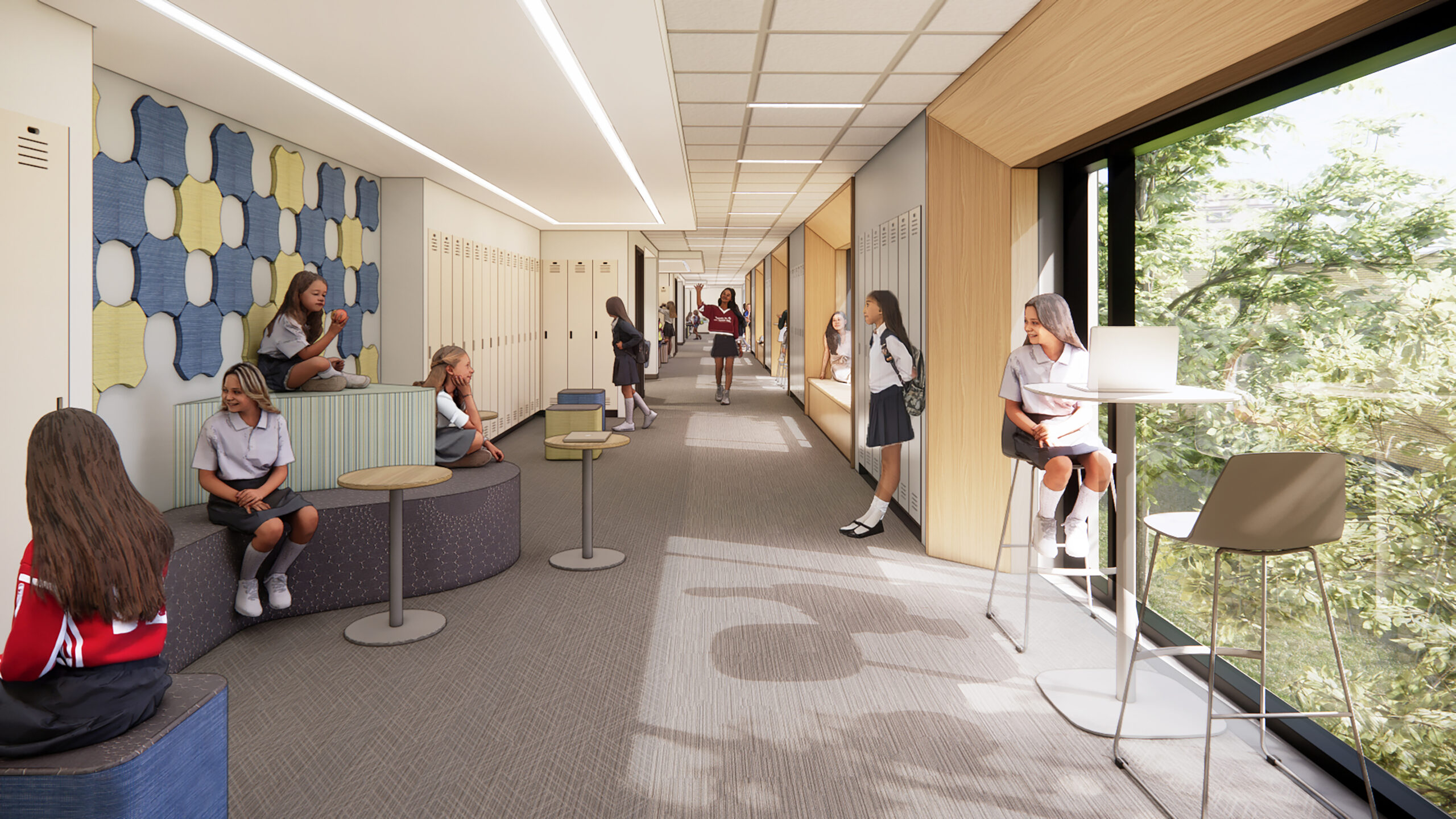
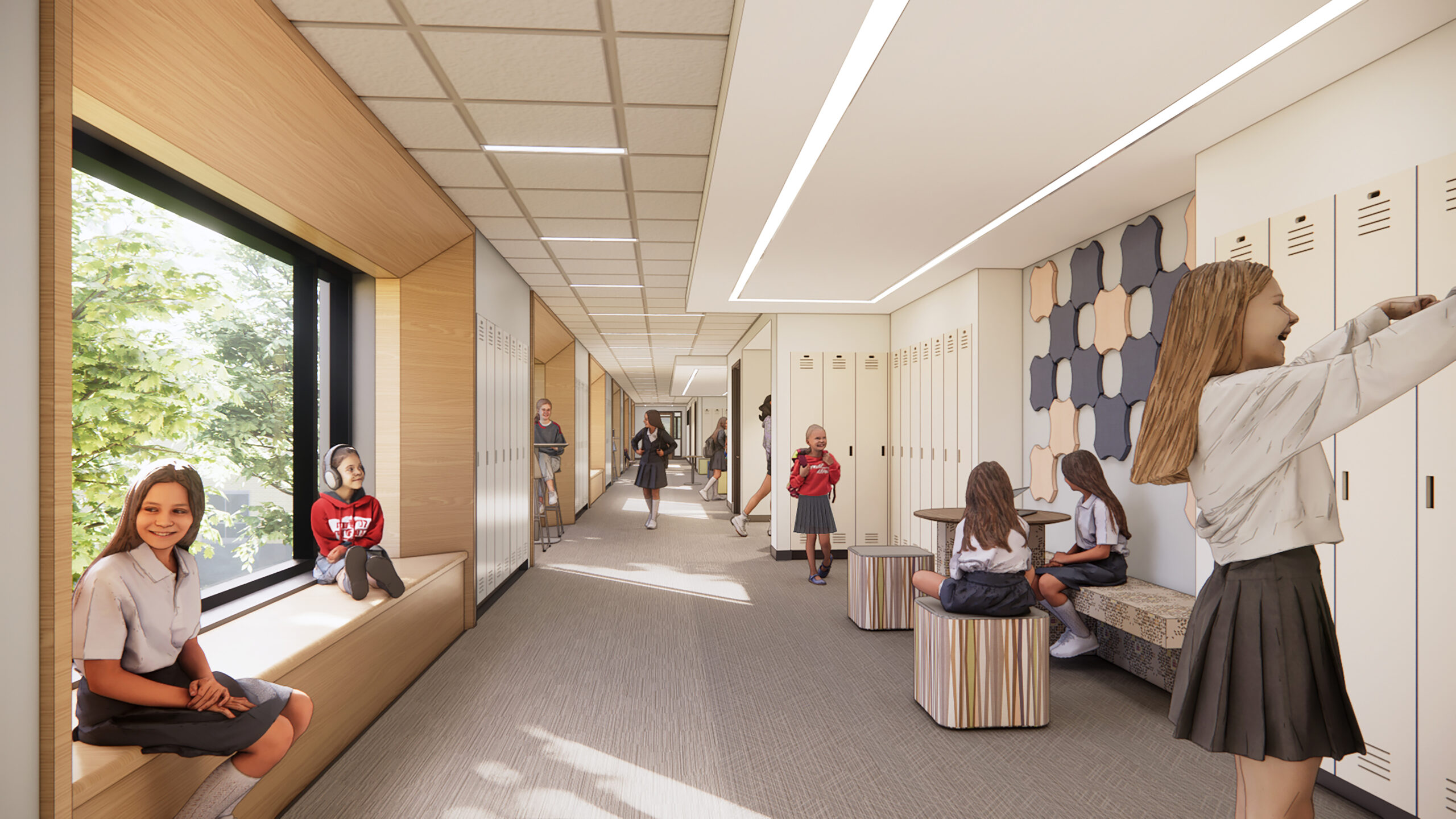
At Visitation Academy, interior spaces support learning, connection, and moments of belonging throughout the school day.
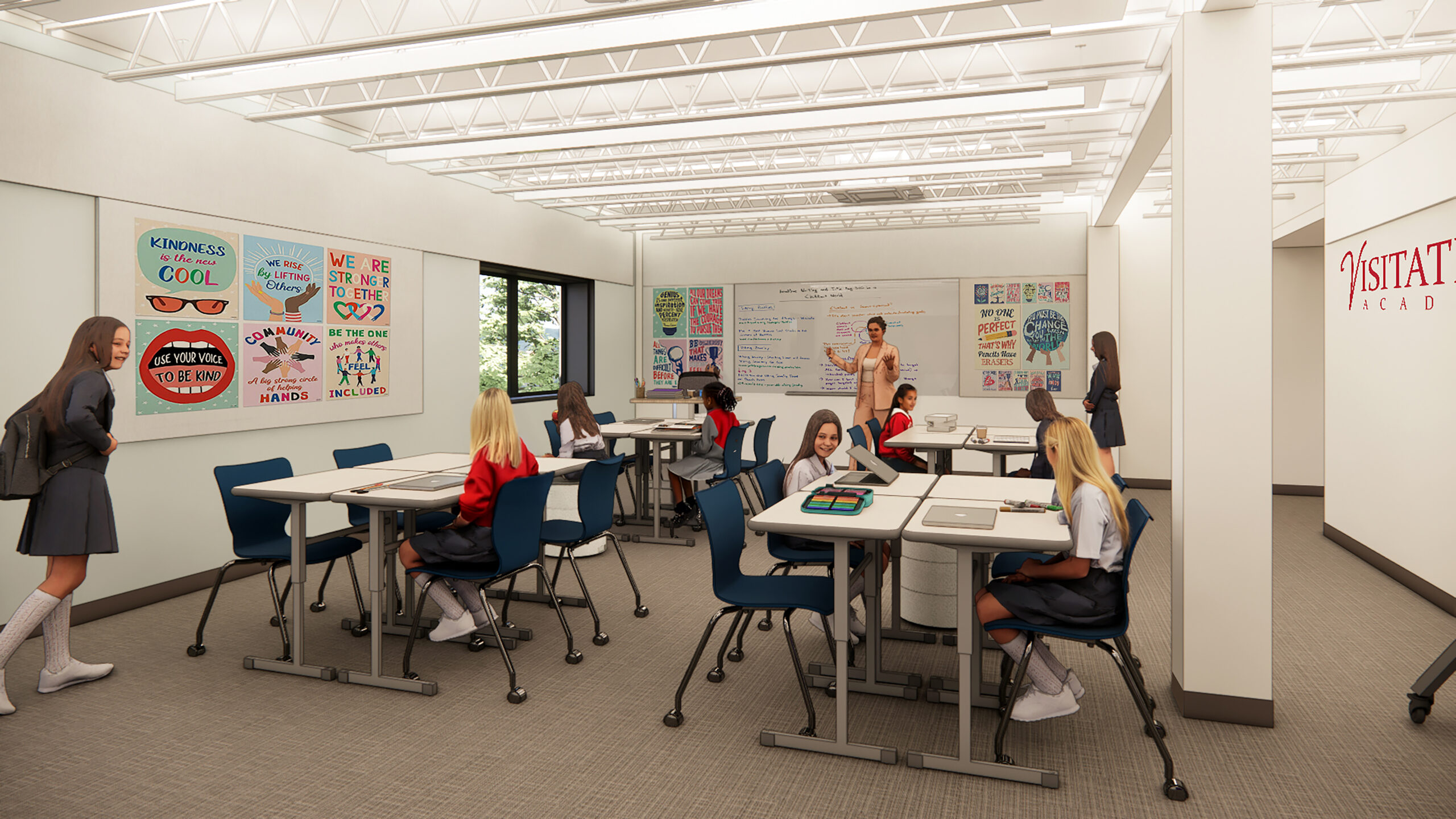
Flexible classroom environments create opportunities for collaboration, focus, and student-centered learning.
For Caitlin, the project is meaningful on both a professional and personal level. As a designer, she contributed to spaces that support connection, curiosity, and belonging. As a parent, she has also been able to see her own daughters experience the community and create memories within a place she helped shape.
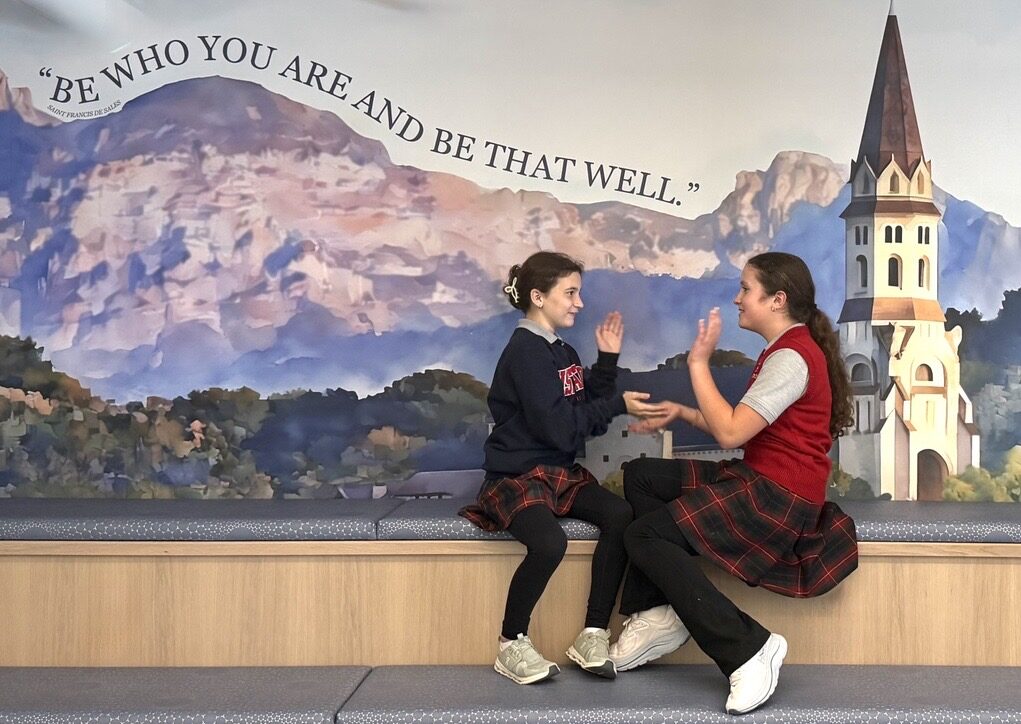
The commons serves as a flexible hub for student life, supporting everything from group learning to everyday play. A custom full-length wall mural highlights Visitation Academy’s foundational Salesian motto, reinforcing the school’s identity and sense of community.
“Interior spaces are more than environments; they are the backdrop for people’s lives, where memories are made and experiences take shape.” – Caitlin Seim
Emily represents a new generation of designers bringing curiosity and fresh perspective to the field. A graduate of Maryville University of St. Louis, she contributes to projects across residential and educational environments. Her approach is grounded in collaboration and a strong interest in how design can elevate everyday experiences.
For Emily, one of her most meaningful projects has been the Arkansas School for the Deaf and Blind, a campus with a rich history in education and community. The unification of two legacy schools created a unique opportunity to design a new instructional building that honors that history while supporting a more integrated future.
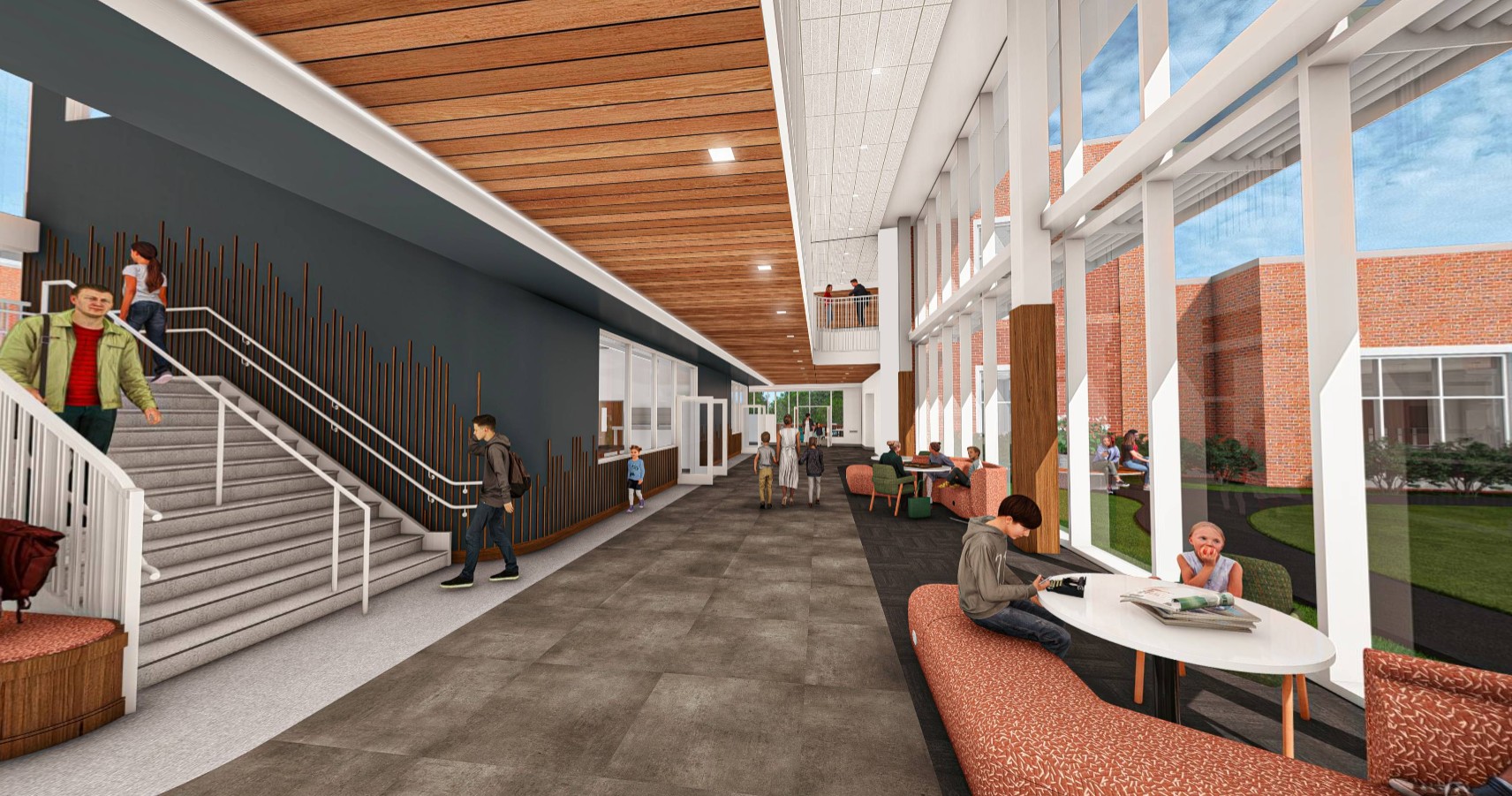
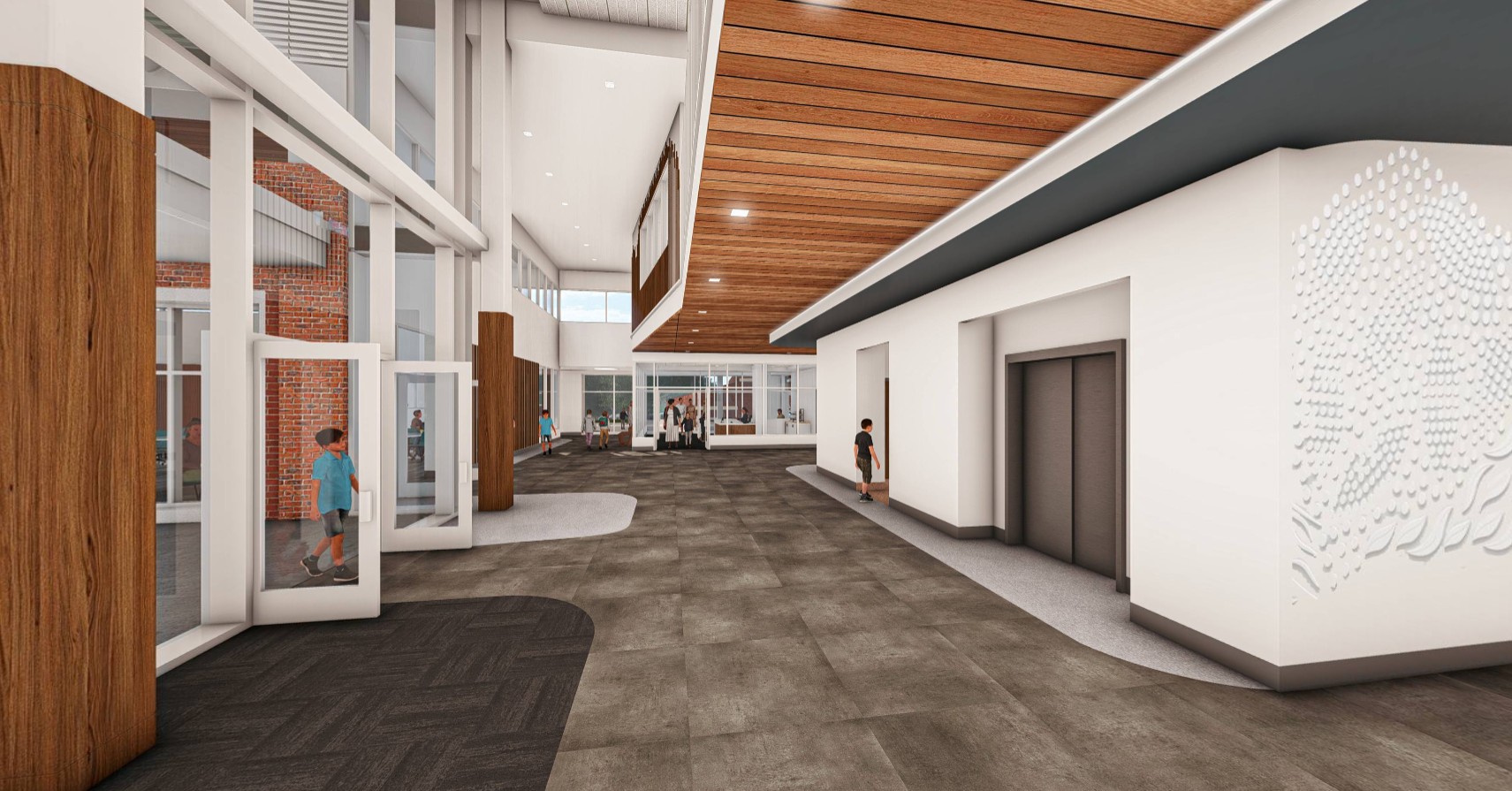
Designed as more than a point of entry, the main lobby at the Arkansas School for the Deaf and Blind serves as a central hub for students, offering clear circulation, natural light, comfortable gathering areas, and visual connections to the campus beyond.
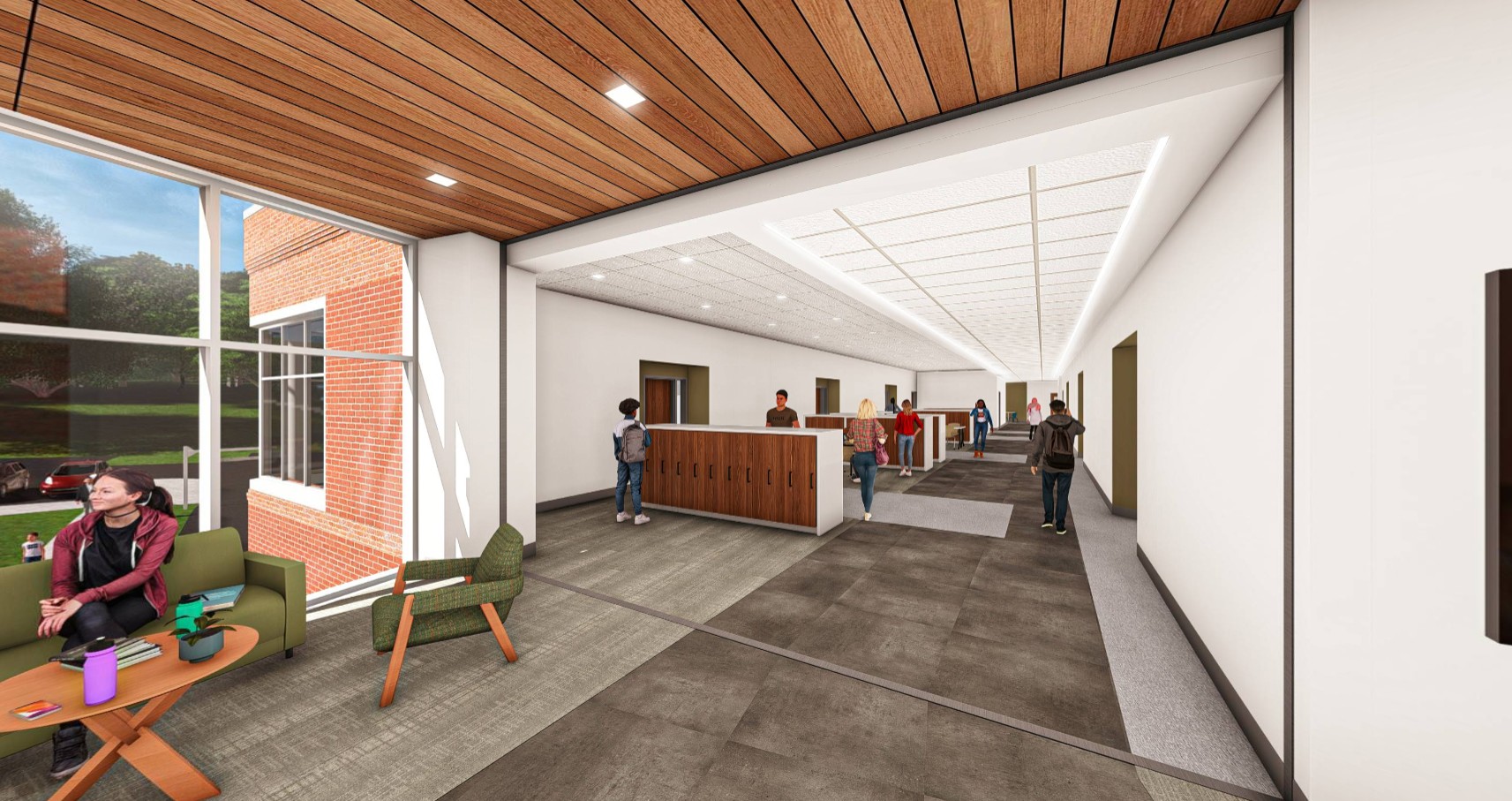
The High School Commons supports both social connection and everyday learning, offering students a bright, flexible space shaped around comfort, visibility, and ease of movement.
Working alongside a multidisciplinary team, the project challenged Emily to think deeply about how people experience space through different sensory perspectives. Designing for students who are Deaf, Hard of Hearing, Blind, or Visually Impaired required a highly intentional approach, an approach in which each design decision supported comfort, navigation, awareness, and independence.
Subtle flooring transitions, for example, were incorporated to create vibrations that can serve as navigational cues for students who are blind, while also supporting spatial awareness for Deaf students. For Emily, the project reinforced that design is not only about how a space looks, but how it feels and functions for the people who use it.
“Design begins with the human experience, creating spaces where people feel supported, comfortable, and included.” – Emily Senjan
Together, Caitlin and Emily reflect a shared commitment to design that prioritizes people. Their recognition by Interior Design highlights their individual contributions, while also reinforcing the value of interiors within learning environments that are becoming more flexible, inclusive, and responsive to student needs.
As Mackey Mitchell’s Learning Environment Innovation practice continues to grow, designers like Caitlin and Emily are helping advance a body of work shaped by curiosity, care, and collaboration. Their projects remind us that learning environments are not only places of instruction. They are places where students build confidence, form relationships, and create lasting memories.